
AECAC President Represents the Interests of the Firearms Trade in Brussels
FACE General Assembly provides an opportunity for high-level policy discussions
While attending the General Assembly of the European Federation for Hunting and Conservation (FACE) on 29 and 30 September, President Michael Blendinger took the opportunity to meet with key political stakeholders in Brussels on matters of importance to our industry.
The event provided an opportunity to strengthen political contacts and gain first-hand insights into ongoing EU legislative and policy developments. But also outside of this meeting Blendinger held discussions with, among others, Member of the European Parliament Lena Düpont (CDU/EPP), a member of the Committee on Civil Liberties, Justice and Home Affairs (LIBE), substitute member of the Committee on Agriculture and Rural Development (AGRI), and EPP coordinator for home affairs; Madeleine Sant’Anna Philipp, Senior Government Official – Responsible for Matters Relating to the Bavarian State Ministry of the Interior, for Sport and Integration at the Representation of the Free State of Bavaria to the European Union and José Romero Morgaz, Team Leader for Firearms and Explosives at the European Commission’s Directorate-General for Migration and Home Affairs (DG HOME).
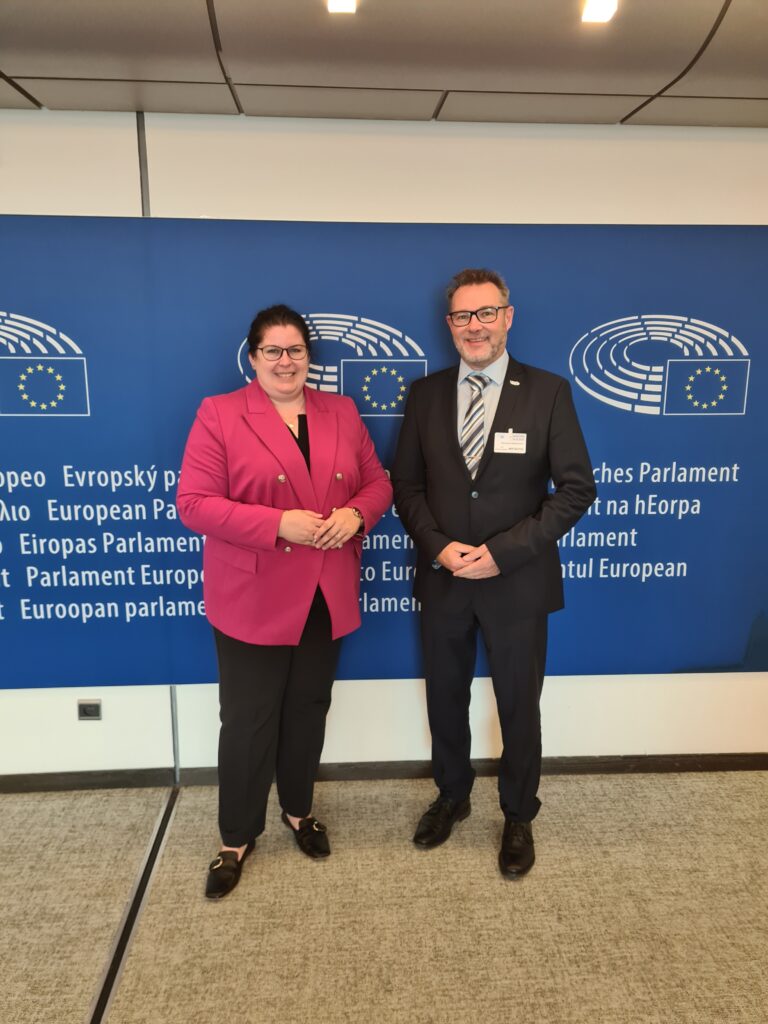
Lena Düpont (MEP), Michael Blendinger
The discussions focused on the evaluation of the EU Firearms Directive (EU) 2021/555 and the current legislative proposal addressing illicit firearms trafficking and other firearms-related offences (2026/0059(COD)). Another key issue was “gold-plating”, whereby Member States introduce national requirements that go beyond EU rules. Blendinger called for a proportionate approach that would not impose unnecessary restrictions on lawful firearms owners or the licensed specialist firearms trade.
“The proposed trafficking directive is, of course, intended to combat serious crime and organised criminal activity,” Blendinger said. “Nevertheless, there is a risk that lawful firearms owners could inadvertently fall within the scope of criminal offences, potentially without even realising it.”
He emphasised that licensed firearms owners and businesses, who have already undergone official checks, should not be treated as serious criminals for minor breaches. “Minor infringements should, in the first instance, be dealt with through administrative penalties rather than criminal sanctions,” he argued.
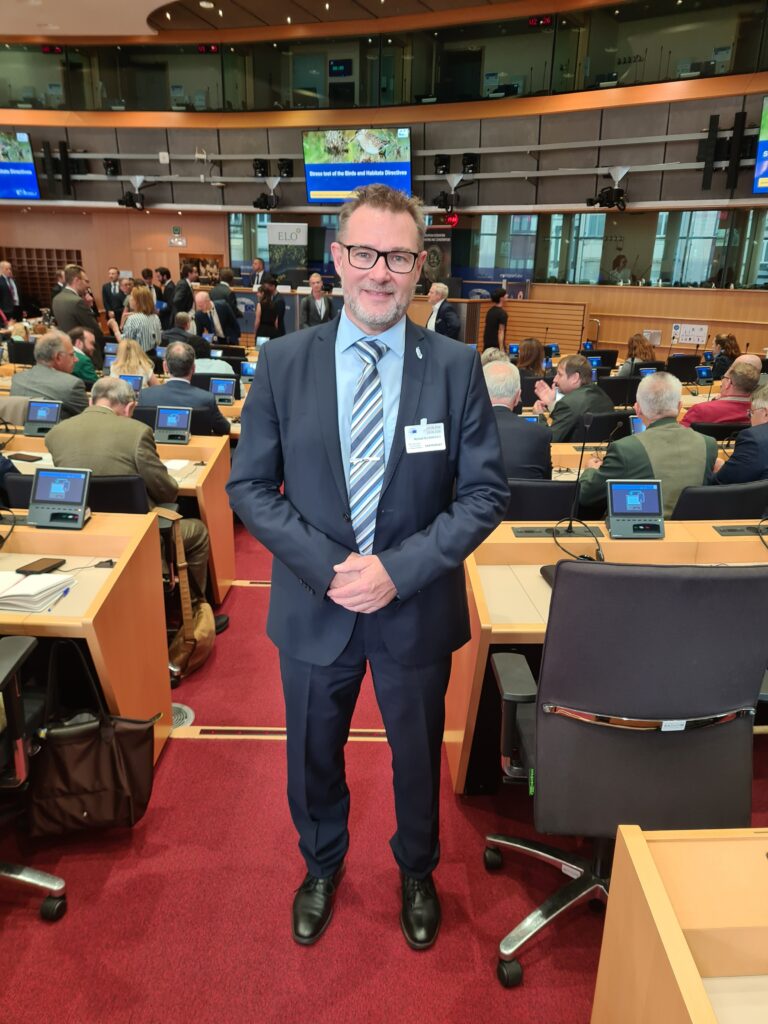
Michael Blendinger
Blendinger also raised concerns about provisions relating to digital, machine-readable design data. “It is equally important that these rules do not in any way obstruct the design of firearms, firearm components or accessories, or hinder inventiveness and innovation,” he said.
Further priorities included clarifying the rules for authorised transfers of firearms and ammunition through transit countries where the items concerned may otherwise be prohibited. Blendinger also highlighted opportunities to simplify administrative procedures through the digitalisation of transfer authorisations.
AECAC President Represents the Interests of the Firearms Trade in Brussels Read More »