News

AECAC President Represents the Interests of the Firearms Trade in Brussels

FACE General Assembly provides an opportunity for high-level policy discussions

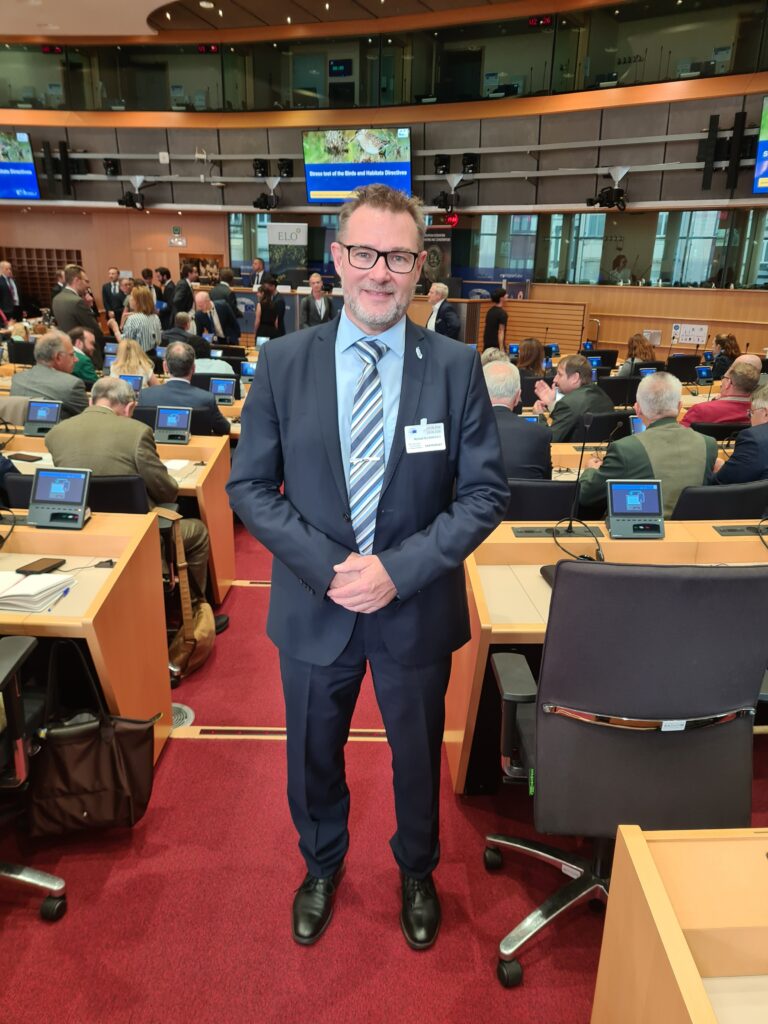
While attending the General Assembly of the European Federation for Hunting and Conservation (FACE) on 29 and 30 September, President Michael Blendinger took the opportunity to meet with key political stakeholders in Brussels on matters of importance to our industry.

The event provided an opportunity to strengthen political contacts and gain first-hand insights into ongoing EU legislative and policy developments. But also outside of this meeting Blendinger held discussions with, among others, Member of the European Parliament Lena Düpont (CDU/EPP), a member of the Committee on Civil Liberties, Justice and Home Affairs (LIBE), substitute member of the Committee on Agriculture and Rural Development (AGRI), and EPP coordinator for home affairs; Madeleine Sant’Anna Philipp, Senior Government Official – Responsible for Matters Relating to the Bavarian State Ministry of the Interior, for Sport and Integration at the Representation of the Free State of Bavaria to the European Union and José Romero Morgaz, Team Leader for Firearms and Explosives at the European Commission’s Directorate-General for Migration and Home Affairs (DG HOME).
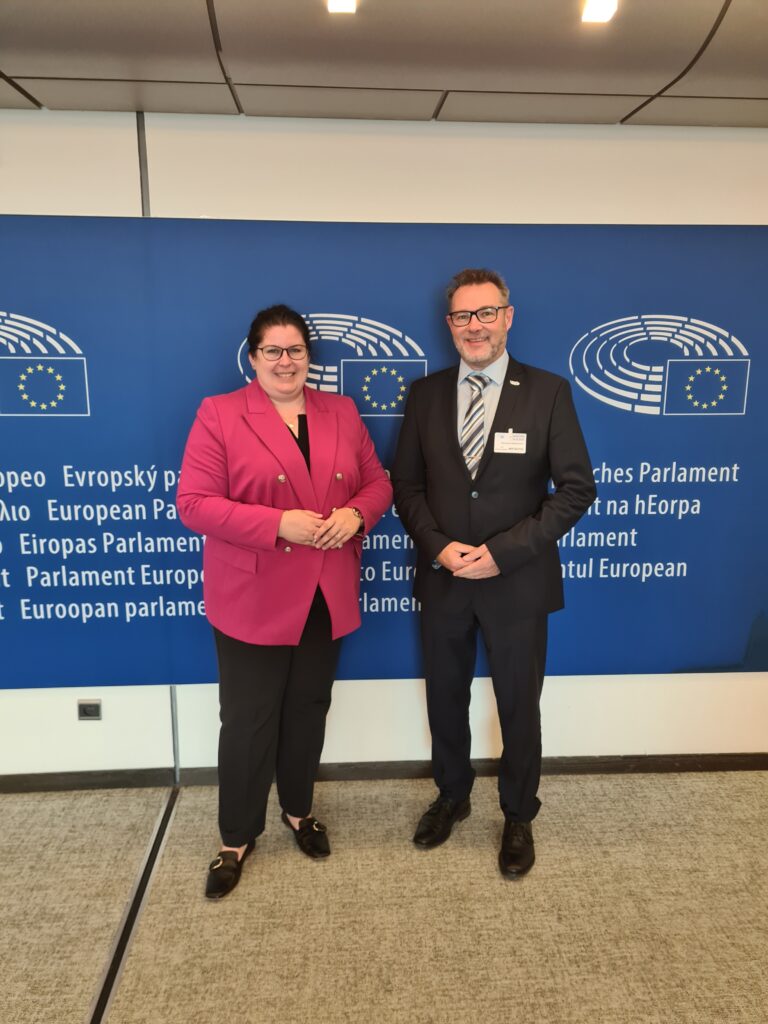
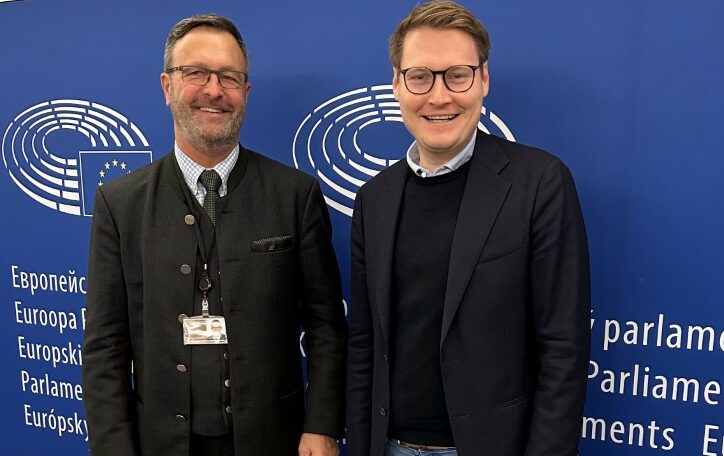
Lena Düpont (MEP), Michael Blendinger

The discussions focused on the evaluation of the EU Firearms Directive (EU) 2021/555 and the current legislative proposal addressing illicit firearms trafficking and other firearms-related offences (2026/0059(COD)). Another key issue was “gold-plating”, whereby Member States introduce national requirements that go beyond EU rules. Blendinger called for a proportionate approach that would not impose unnecessary restrictions on lawful firearms owners or the licensed specialist firearms trade.

“The proposed trafficking directive is, of course, intended to combat serious crime and organised criminal activity,” Blendinger said. “Nevertheless, there is a risk that lawful firearms owners could inadvertently fall within the scope of criminal offences, potentially without even realising it.”

He emphasised that licensed firearms owners and businesses, who have already undergone official checks, should not be treated as serious criminals for minor breaches. “Minor infringements should, in the first instance, be dealt with through administrative penalties rather than criminal sanctions,” he argued.
Michael Blendinger

Blendinger also raised concerns about provisions relating to digital, machine-readable design data. “It is equally important that these rules do not in any way obstruct the design of firearms, firearm components or accessories, or hinder inventiveness and innovation,” he said.

Further priorities included clarifying the rules for authorised transfers of firearms and ammunition through transit countries where the items concerned may otherwise be prohibited. Blendinger also highlighted opportunities to simplify administrative procedures through the digitalisation of transfer authorisations.

AECAC President Represents the Interests of the Firearms Trade in Brussels Read More »

AECAC in Brussels: Discussions with the European Commission and the European Parliament

From 23 to 25 June 2026, the European firearms trade association AECAC held talks in Brussels with the European Commission and Members of the European Parliament. The discussions focused on the evaluation of the EU Firearms Directive, the proposed directive on firearms trafficking, and their implications for the lawful firearms trade and lawful firearms owners. AECAC was represented by its President, Michael Blendinger, who is also President of the German Association of Gunsmiths and Firearms Dealers (VDB), and its Secretary-General, Peter Brass.

“Reality Check”: Practical Problems with the Firearms Directive
On 24 and 25 June, the European Commission’s Directorate-General for Migration and Home Affairs (DG HOME) held a “Reality Check” on the Firearms Directive. This was the first time the Commission had engaged in a comprehensive exchange with the private firearms sector in this format. European and national associations representing manufacturers, dealers, shooting sports, hunting and collectors shared their experiences with the existing rules.

A key problem is so-called “gold-plating”: some Member States implement EU requirements more stringently than required. This results in divergent national rules, hampers cross-border activities and runs counter to the objective of a harmonised internal market. AECAC therefore called for uniform, legally clear and workable rules, together with less bureaucracy, without compromising internal security.

Among other proposals, Blendinger suggested extending the general transfer authorisation for licensed commercial operators to cover imports and replacing case-by-case prior consent with a digital notification system. This could shorten processing times, reduce the burden on authorities and minimise data transmission errors in the Internal Market Information System (IMI). Other priorities included digitalising the European Firearms Pass and providing compensation for stock that becomes unsaleable as a result of changes in legislation.

The discussions were professional and constructive. Commission representatives took note of the sector’s practical experience and proposals. AECAC expects these findings to be taken into account in the ongoing evaluation.

Discussions with Members of the European Parliament
On 23 June, Blendinger and Brass met Members of the European Parliament Moritz Körner and Verena Mertens. Both sit on the Committee on Civil Liberties, Justice and Home Affairs (LIBE); Mertens is also the European People’s Party (EPP) Group’s shadow rapporteur on the proposed directive on firearms trafficking.

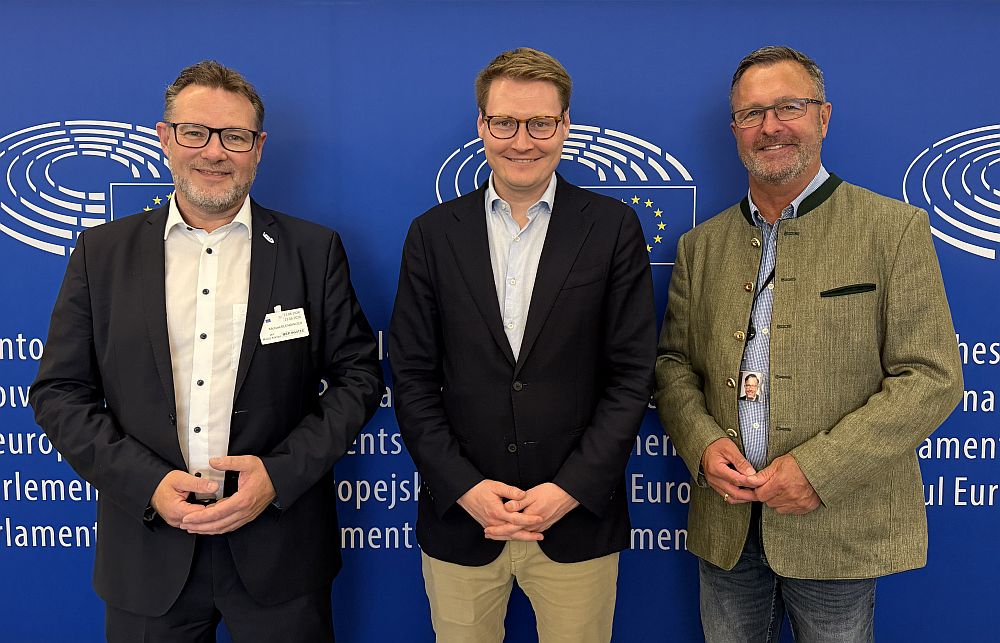
f.l.t.r. Michael Blendinger, Moritz Körner (MEP), Peter Brass

AECAC stressed that new EU rules must clearly distinguish between the lawful firearms trade and illicit firearms trafficking. Additional administrative burdens on businesses operating lawfully should be avoided. A detailed discussion of individual provisions of the proposed trafficking directive was not yet possible, as parliamentary consideration of the draft had been postponed until 14 July 2026. Nevertheless, initial questions were raised, particularly concerning 3D printing.

The evaluation of the Firearms Directive and its specific impact on specialist firearms dealers and gunsmiths were also discussed. The constructive meetings strengthened existing contacts and reaffirmed the role of AECAC and VDB as knowledgeable interlocutors at European level.

f.l.t.r. Peter Brass, Verena Mertens (MEP), Michael Blendinger

AECAC will continue its dialogue with the Commission and its exchanges with Members of the European Parliament. Its objective remains to ensure that the interests of the lawful firearms trade are represented at an early stage in European legislative and evaluation processes.

AECAC in Brussels: Discussions with the European Commission and the European Parliament Read More »

AECAC General Assembly 2026 in Nuremberg

On 27 February 2026, the General Assembly of the European Association of the Civil Commerce of Weapons (AECAC) took place in Nuremberg. Representatives of member associations from several European countries exchanged views on current political developments and key issues affecting the civilian firearms trade in Europe.

A special item on the agenda of the public session was an address by Stefan Köhler, Member of the European Parliament. He provided an overview of current political developments at EU level, including the evaluation of the EU Firearms Directive and the draft directive presented by the European Commission the day before the assembly, entitled “on combating firearms trafficking and other firearms-related offences.” He also emphasized the importance of the sector.

Stefan Köhler

Dr. David Scallan, Secretary General of the European hunting association FACE, reported on the current state of discussions regarding a possible ban on lead in ammunition. According to the most recent draft of the European Commission, lead-containing rifle ammunition for hunting and sport shooting would be exempt from a ban, while potential restrictions are currently focused on shotgun ammunition. European associations continue to work together to advocate for practical and proportionate regulations.

Dr. David Scallan

Over the past year, AECAC’s political activities have focused in particular on discussions with members of the European Parliament and the European Commission, as well as on the evaluation of the EU Firearms Directive. The association is also examining the European Commission’s new draft directive on combating illicit firearms trafficking in order to assess potential implications for the legal firearms trade at an early stage.

During the regular elections, Michael Blendinger (Germany) was confirmed as President and Angelos Pitsillides (Cyprus) as Vice-President for a further three-year term. Palle Skov Hansen (Denmark) was re-elected to the Executive Committee, while Pietro Pietrafesa (Italy) succeeds George Kyrgias as a member of the Executive Committee.

AECAC expressed its sincere thanks to George Kyrgias (Greece) for his many years of service on the Executive Committee.

Michael Blendinger

AECAC General Assembly 2026 in Nuremberg Read More »

Restricting lead in ammunition in Europe: Implications and consequences

The event in the European Parliament on the planned EU restrictions on lead ammunition, hosted by MEP Riho Terras (EPP, Estonia), made it clear that the current regulatory proposal entails significant practical, economic, and security-related problems. While environmental goals are acknowledged, representatives from hunting, shooting sports, and industry point out that the proposed regulation in its current form is unbalanced and would have unreasonable consequences for the sectors concerned.

Picture by Alexander Louvet

The European ammunition industry emphasized that civilian and military production are closely interconnected. Therefore, restrictions in the civilian market would have direct effects on the supply of security authorities and armed forces – despite the exemptions provided. This endangers production capacities, supply chains, and investment security.

The regulation would also impose considerable burdens on shooting sports and their infrastructure. Sports associations warn of impractical requirements that threaten both elite and grassroots sports. Many clubs would be unable to afford the switch to alternative projectiles, new safety requirements, or costly modernization of shooting ranges.

The AECAC also spoke up, warning that overly short transition periods could financially burden gunsmiths and the firearms trade due to unsellable ammunition stocks, resulting in significant economic losses for the sector. The Commission acknowledged these concerns and agreed that further discussion is necessary. In response to the claim that Denmark had switched many years ago and banned the use of lead in ammunition, the AECAC pointed out that Denmark is not a member of the CIP and therefore had no related rules to follow—something that does not apply to many European Member States. Furthermore, the transition in Denmark took several years.

From the perspective of the AECAC, it is also questionable whether the intended environmental and health objectives are proportionate to the actual burdens, the existing regulatory framework, and the ongoing voluntary transition processes. Some statements by the Commission regarding the technical availability of alternative ammunition differ from the industry’s internal reality.

Peter Brass / Picture by Alexander Louvet

Overall, the discussion shows that the planned EU restriction is, in its current form, immature and insufficiently considers essential economic and security-related factors. The AECAC therefore, in line with the concerns expressed by industry and other associations, calls for a practical, proportionate, and technically feasible approach that takes environmental goals into account without destabilizing the entire sector.

You can find a report from FACE HERE and the recorded event HERE. 

Restricting lead in ammunition in Europe: Implications and consequences Read More »

AECAC engages in political talks in Brussels

AECAC Secretary General Peter Brass and political consultant Peter Husen held several meetings in Brussels with representatives of the European Commission and the European Parliament. The discussions focused on current and upcoming EU initiatives on firearms legislation, including a new directive to combat the illegal trafficking of firearms and a comprehensive evaluation of the existing Firearms Directive.

f.l.t.r. Peter Brass; Christian Doleschal (MEP); Peter Husen

AECAC emphasized its support for measures against criminal activity but warned against unnecessary bureaucracy that offers no real security benefits. In addition to the institutional meetings, the association also used various political events to strengthen networks and position AECAC as a reliable partner for policymakers.

f.l.t.r. Peter Husen; Marion Walsman (MEP); Peter Brass

“Looking ahead to 2026, we want to be actively involved from the very beginning in these important legislative processes,” said Peter Brass.

f.l.t.r. Peter Husen; Charlie Weimers (MEP); Peter Brass

AECAC engages in political talks in Brussels Read More »

AECAC President visits the Swiss Gunsmiths‘ and Gun Dealers’ Association

On Monday, 7 April 2025, the President of the AECAC, Michael Blendinger, accepted the invitation to the 113th General Assembly of the Swiss Gunsmiths‘ and Gun Dealers’ Association SBC/ASA.
At the well-attended event in Lupfig (Aargau), after the internal part of the association, the president of the SBC, Daniel Wyss, presented the public part with the annual report and elections to board positions, and the head of apprenticeships, Urs Glauser, honoured the examination graduates.
This was followed by several informative short presentations on hunting regulations, changes to firearms legislation and specific Swiss topics such as the list of aids for shooting with army weapons, as well as greetings from various Swiss associations and institutions.

In addition to a commitment to the industry, the presentation of the TWINT payment app brought a glimmer of hope for the now global problem of the exclusion of the arms trade from online payment service providers, at least for our Swiss colleagues.

Vice President Christoph Gilgen led through the Foreign/International Politics item and gave President Michael Blendinger the opportunity to introduce AECAC and briefly report on the latest developments in EU legislation, such as the planned lead ban under the REACH Regulation and the revision of the Firearms Directive in 2025.
The agenda was concluded with a speech by Thierry Burkart, member of the Council of States of the Canton of Aargau and party president of the Swiss FDP, on the topic of “Security policy in connection with the arms industry”.
The guests then met for an aperitif, followed by lunch together, which provided an opportunity for many interesting discussions.

A table exhibition for the presentation of new products flanked the all-round successful event.

Michael Blendinger (AECAC-President)
(Photo by Nathalie Homberger)

Daniel Wyss (SBC-President)
(Photo by Nathalie Homberger)

The number of guests that our Swiss colleagues were able to gather was remarkable. For example, in addition to the aforementioned party president of the Swiss FDP, Thierry Burkart, the Managing Director of Jagd Schweiz, David Clavadetscher, as well as high-ranking representatives of the Central Weapons Centre, the Ministry of Economic Affairs SECO and the SAT division of the Swiss Armed Forces were also present.
President Blendinger commented: “You can clearly see that the firearms industry in Switzerland is held in high esteem by the specialised services. I was impressed by the high-calibre visitors and discussions at eye level. Even though Swiss firearms legislation also has some pitfalls, the mutual interaction reflects the defining Swiss principle: direct and immediate democracy, in which decisions are actually made by the people.”

AECAC President visits the Swiss Gunsmiths‘ and Gun Dealers’ Association Read More »

AECAC Annual Meeting in politically thrilling times

On Friday, February 28, 2025, our annual general meeting took place at the IWA in Nuremberg, Germany. AECAC President Michael Blendinger was pleased to welcome new members from Austria and Romania again this year. However, the political pressure continues to increase: From the threat of a ban on lead ammunition to a possible revision of the EU Firearms Directive.

Brussels will become even more important for the national associations this year. Unlike in the defense sector, where the aim is to massively expand capacities in Europe, the sign is pointing to further restrictions in the area of civilian legal weapons.

The EU Commission’s recent proposal on the ban on lead ammunition underlines the political demand for more and faster restrictions. The participants were informed about the current plans by guest speaker David Scallan, Secretary General of the European Hunting Association FACE.

In autumn 2025, a new directive on arms trafficking is also to be published. Here, too, the industry must pay close attention to ensure that there are meaningful improvements in security, but not additional bureaucratic effort for those companies that already comply with all the rules.

The question of how the European Commission intends to further develop the Firearms Directive will also be of great importance. These are all issues on which national associations need to work closely together at European level.

“I am very pleased that we were able to discuss the common challenges so intensively and so unanimously in Nuremberg. The upcoming political issues will be challenging, but the AECAC is well equipped for them,” said AECAC President Michael Blendinger, summarizing his impressions from Nuremberg.

New admission of the Austrian member Internationaler Schützenbund (ISB)

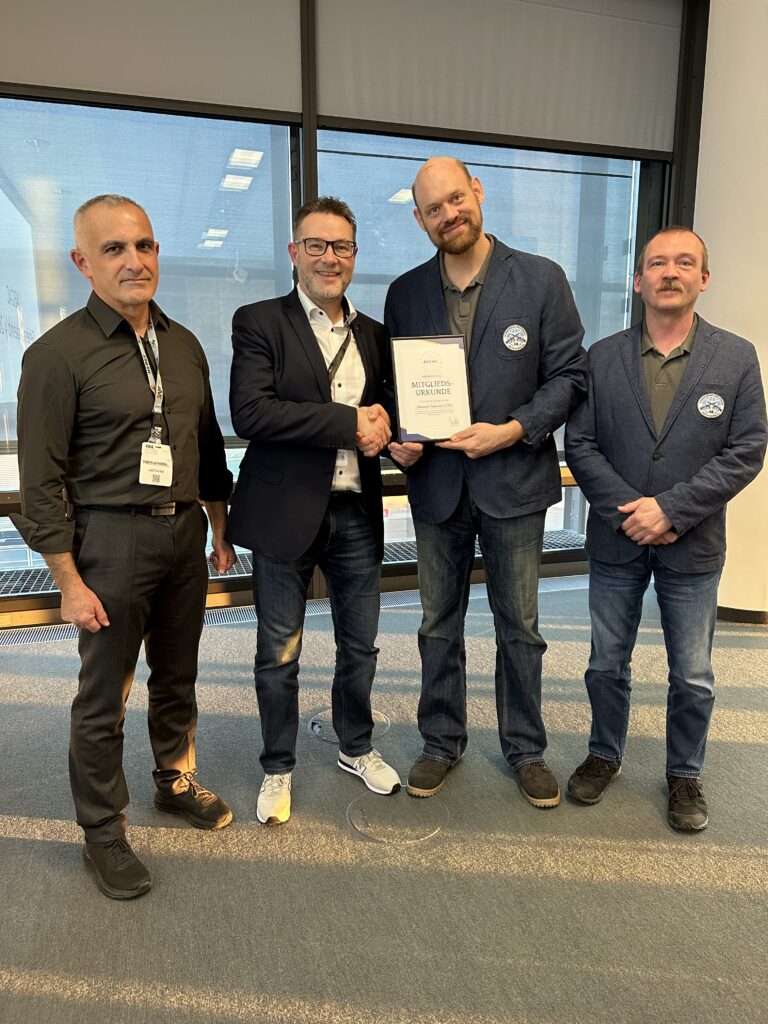
f.l.t.r. Angelos Pitsillides (AECAC-Vice President); Michael Blendinger (AECAC-President); Rüdiger Gruber (ISB-President); Michael Kleinböck (ISB-Treasurer)

AECAC Annual Meeting in politically thrilling times Read More »

AECAC submits Statement on EU Consultation

The European Association of the Civil Commerce of Weapons (AECAC) has taken a clear stance (feedback was sent on December 11th) as part of the ongoing EU consultation regarding the EU-wide harmonization of criminal provisions related to firearms. The consultation examines whether a new directive is needed to establish equivalent criminal provisions across the EU for the illegal manufacturing of firearms, aiming to prevent criminals from exploiting countries with more lenient penalties.

Although AECAC explicitly supports efforts to combat the illegal trade in firearms, the proposed legislative initiative is considered ineffective. The planned measures would likely do little to deter criminals or terrorists effectively, while disproportionately burdening the legal civilian firearms trade.

Priority on Implementing Existing Regulations
AECAC emphasizes that the EU Firearms Directive (2021/555) has yet to be fully implemented across all member states. Differing national interpretations and implementation levels hinder harmonized regulations. Before introducing new laws, the evaluation of the existing directive, scheduled for 2026 under Article 24 of the directive, should be awaited. Additional directives without prior evaluation could increase the risk of inconsistencies and create unnecessary administrative burdens and uncertainties for the legal firearms trade.

Uniform Regulations Instead of Overregulation
AECAC calls for the harmonization of existing import and export regulations before introducing new measures. Disparities in national regulations—such as individual or general permits—cause legal uncertainties and complicate intra-European trade. Moreover, the 
Internal Market Information System (IMI) is not consistently maintained, further complicating the approval process. Member states should be required to justify any over-compliance with European minimum standards to minimize the burden on domestic trade.

Digitalization and Improved Networking as Key Solutions
From AECAC’s perspective, enhancing the networking of competent authorities and deploying digital systems are crucial for increasing the effectiveness of monitoring and enforcing existing laws. National legal provisions that hinder information sharing complicate investigations and obstruct effective collaboration between security authorities.

Picture: Christian Lue / unsplash.com

Standardized Marking of Alarm, Irritant and Signal Weapons and Realistic Assessment of 3D Printing
AECAC advocates for EU-wide standardized marking of Alarm, Irritant and Signal Weapons in line with Implementing Directive (EU) 2019/69 to ensure clear identification and combat the illegal conversion into functional firearms. At the same time, the association disagrees with the claim that no EU member state penalizes the unauthorized manufacturing of firearms using 3D printing. As long as illegal manufacturing is generally sanctioned, there is no need for specific regulations for 3D printing, as this would only lead to unnecessary regulatory complexity.

AECAC appeals to the European Commission to adopt pragmatic and evidence-based approaches to improve security in Europe without disproportionately burdening the legal firearms trade.

The German Federal State of Hesse calls for stricter criminal provisions
Against the backdrop of the EU-level consultation, AECAC similarly criticizes similar demands from Germany, as recently expressed at the end of November by the Conference of Justice Ministers at Hesse’s initiative. There, the federal government was urged “to promptly present a draft law that adjusts the sentencing framework in the Weapons Act for commercial and organized firearms trafficking to reflect the severity of the offenses and, if necessary, aligns it similarly to the War Weapons Control Act.”

Considering the ongoing EU-level consultation, it is believed that initiating an independent effort in Germany is entirely premature, as the consultation’s results and potential recommendations from the EU are currently unknown. A premature adjustment of German penalties risks perpetuating the inconsistency criticized in the consultation if Germany adopts stricter standards than the EU. Additionally, this could necessitate two rounds of adjustments, resulting in unnecessary legislative initiatives.

While the intention to “punish illegal firearms trafficking more severely” can be understood as a commendable initiative within the context of an election campaign, it would be more prudent in this case to await an EU agreement.


AECAC submits Statement on EU Consultation Read More »

New EU Commission in office. Starting signal for the new EU legislative period!

After some political back and forth, the new European Commission was able to take up its work on December 1st, 2024. This means that the regular legislative machine is starting to run again in Brussels as proposals for EU laws may only be made by the Commission. The AECAC used the occasion to hold various talks in Brussels.

In the next five years, there will be a number of European policy issues for the arms trade and the owners of civilian firearms. With the official adoption of the EU Firearms Regulation imminent, there will be new rules for international trade. And very importantly, we must expect new proposals for the EU Firearms Directive by 2026 at the latest.

Verene Mertens (MEP) and Peter Brass

Moritz Körner (MEP) and Peter Brass

For this reason, our Secretary-General Peter Brass met with various MEPs. Verena Mertens, EPP-MEP from Germany, has been a member of parliament since the European elections in June 2024. Mertens, with a professional background as police officer, sits on the Committee on Civil Liberties, Justice and Home Affairs.

MEP Moritz Körner has been a member of the European Parliament for Renew Europe since 2019. He, too, works in the “Committee on Internal Affairs”, which is so important to the firearms sector. In general, he hopes, the new EU Commission will weaken the well-known Brussels approach of “regulating as much as possible as precisely as possible”.

The AECAC can only agree with this!

New EU Commission in office. Starting signal for the new EU legislative period! Read More »

ECHA’s Proposed Lead Ammunition Ban Faces Cost Concerns: New Study Reveals Financial Challenges for Shooting Ranges

The European Chemicals Agency (ECHA) has proposed restrictions on the use of lead ammunition across the EU for hunting and sports shooting. A recent study commissioned by the European Shooting Sports Forum (ESSF) highlights a significant underestimation of the costs associated with upgrading shooting ranges to comply with ECHA’s proposed regulations, amounting to a potential shortfall of €4-5 billion. The study reveals that most ranges across Europe are not equipped to meet these stringent requirements, raising substantial economic and practical concerns. Stakeholders are calling on the European Commission to consider alternative risk management solutions that achieve environmental and health objectives without imposing disproportionate financial burdens on the shooting sports community.

To the article.

Picture: Remy Gieling / unsplash.com

ECHA’s Proposed Lead Ammunition Ban Faces Cost Concerns: New Study Reveals Financial Challenges for Shooting Ranges Read More »